Structure of Quantum Theory

→ Europe/Berlin
Center for Soft Nanoscience (SoN)

Center for Soft Nanoscience (SoN)

Busso-Peus-Str.10 48149 Münster Germany
Hippolyte Dourdent, Matthias Kleinmann (Department for Quantum Technology)
Beschreibung

The workshop Structure of Quantum Theory aims to bring together experts on the foundations of quantum theory, for example, working on Bell inequalities, contextuality, quantum causality, or generalized probabilistic theories. The workshop aims to create an informal atmosphere with sufficient time for discussions, in order to facilitate collaborations and interactions.

Dates: Monday, September 21st 2026 – Thursday, September 24th 2026. Talks will be from Monday morning to Thursday noon.

Invited speakers:


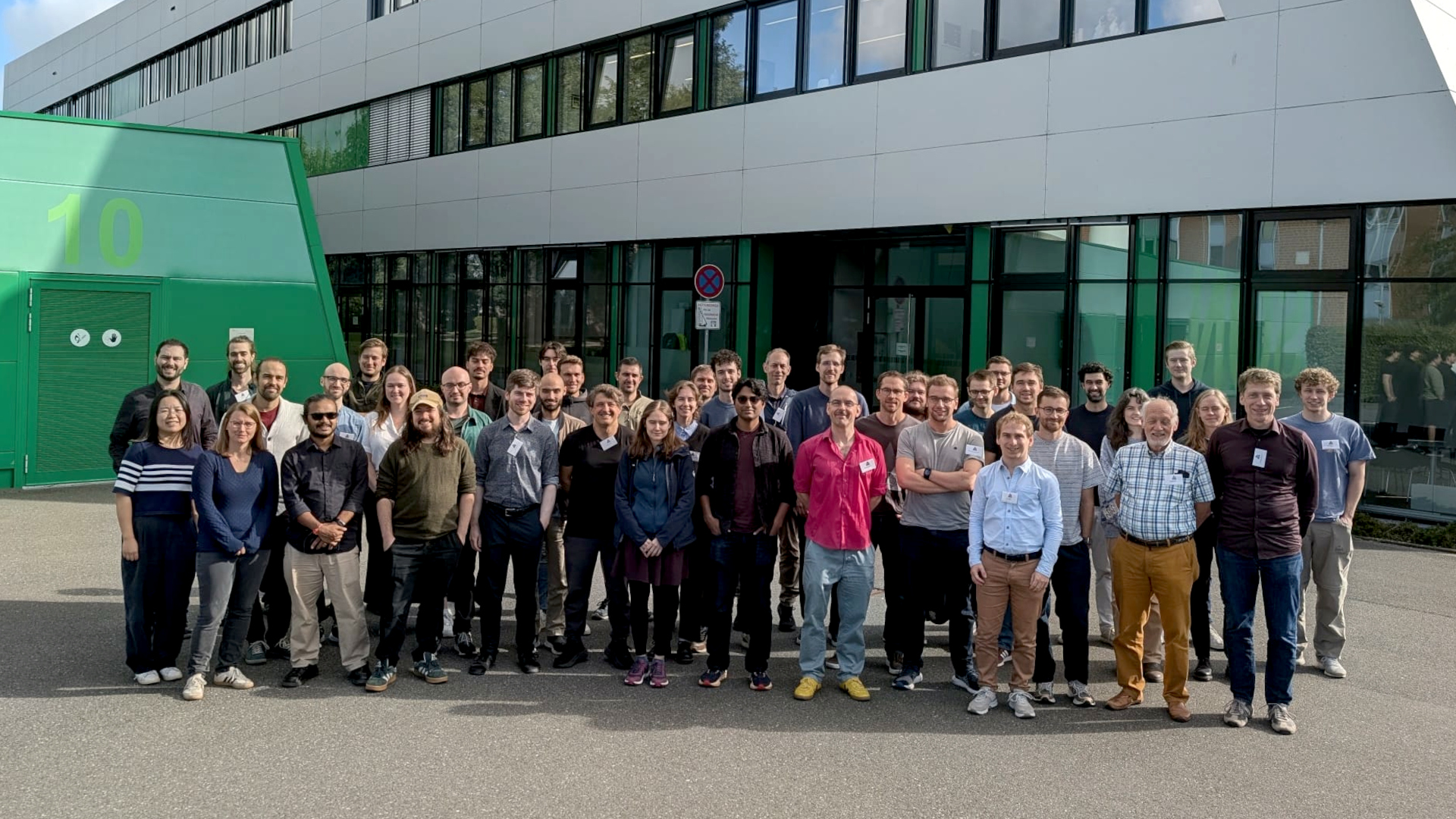
SoQT group photo


Call for contributions:

Submissions for contributed talks or posters are welcome. Please register by sending an email to hippolyte.dourdent@uni-muenster.de by Friday, 17 July 2026.


Travel information:
Münster is well connected by train. The closest airports are (travel times):

  • 1 hour: Dortmund DTM, Düsseldorf DUS
  • 2 hours: Köln/Bonn CGN, Hanover HAJ
  • 3 hours: Frankfurt FRA, Amsterdam AMS, Hamburg HAM

In Münster, the most efficient transport is by bike or public transport.


Organized by the Foundations of Quantum Theory group at the University of Münster.

    • 09:00 → 09:45
      Sending quantum states with classical communication 45m

      Given a collection of quantum states in one lab, how costly is it to send them to another lab by using only classical communication resources? We introduce a framework for assessing the classical cost of sending quantum states and explore its consequences. The main focus of the talk is on two highlights of the ensuing analysis. First, we determine the scaling of the classical complexity needed to account for all quantum states. This gives insight to the fundamental advantage of quantum resources. Second, we prove that the proposed notion of classical communication is necessary and sufficient for quantum correlation advantages in a three-party prepare-and-measure-like scenario. This gives it a clear task-interpretation to our concept. As a corollary, it follows that the cost of classically simulating the correlations obtained from quantum states diverges (with known scaling), even for qubits where limitation to the standard prepare-and-measure scenario allows classical simulation with just two bits. This suggests that, in analogy with the traditional Bell experiments versus more sophisticated nonlocality tests, the historical focus on the simplest scenario (namely the prepare-and-measure scenario) has artificially hidden the full power of the quantum correlations that can be generated from quantum states.

      Sprecher: Armin Tavakoli
    • 09:45 → 10:30
      Bell nonlocality without input choices in quantum networks 45m

      After many decades of studying quantum nonlocality in bipartite and "trivial" multipartite scenarios, the field is now showing interest in networks where multiple independent sources distribute physical systems to different sets of parties. The study of nonlocality in networks is resulting very fruitful, with many interesting results, especially at the foundational level. Yet, the need to take into account the independence of the sources makes understanding network correlations difficult in general. In this talk, I will exemplify this difficulty by trying to answer the question "what is the simplest demonstration of quantum nonlocality in networks?". This will take us through a journey that begins at the very start of the field in 2012 and ends by demonstrating that quantum nonlocality in the triangle network without inputs and with binary outcomes is possible. This demonstration refutes an 8-year-old conjecture in the field.

      Sprecher: Alejandro Pozas-Kerstjens
    • 10:30 → 11:00
      Coffee Break 30m
    • 11:00 → 11:30
      Robust certification of high-dimensional quantum devices 30m

      Certifying quantum behavior from classically accessible data is essential for secure communication and scalable quantum technologies. While powerful certification methods such as Bell nonlocality and quantum steering exist, their implementation typically requires entanglement or additional assumptions, and experimental demonstrations mainly focus on low-dimensional systems. In minimal prepare-and-measure scenarios [1], where a sender encodes information into quantum states and a receiver performs a single measurement, robust certification becomes particularly challenging, especially in the presence of noise and in higher-dimensional Hilbert spaces. In this talk, we will present a recent theory-experiment work [2] where we propose, design, and experimentally implement a protocol that certifies quantumness between two distant parties without the need for preshared resources or measurement incompatibility. The experiment is carried out using the orbital angular momentum degrees of freedom of single photons, chosen for increased dimensionality that is scalable. We demonstrate the robustness of the protocol through rank‑stability analysis of the observed correlations, which enables the certification of non‑classicality even in the presence of noise. These results provide a practical route to validate high-dimensional quantum communication systems and open new possibilities for secure and dimension-efficient quantum information processing. More broadly, this talk will also cover the basics and existing challenges of certification via communication, and the recent advances in the field.

      [1] Background, theory and current limitations in certification via communication: https://arxiv.org/abs/2308.07727, https://arxiv.org/abs/2303.06990.
      [2] Main work to be presented (high-dimensional protocol + experiment): https://arxiv.org/abs/2605.04338

      Sprecher: Albert Rico
    • 11:30 → 12:15
      The quantum information picture of QFT 45m
      Sprecher: Nicolas Gisin
    • 12:15 → 14:30
      Lunch 2h 15m
    • 14:30 → 15:15
      Timed demolition measurements 45m

      Imagine an experimental scenario where a closed quantum system, evolving through a time-independent Hamiltonian, is subject to a demolition measurement at a chosen time. The Hamiltonian, the measured observables, the initial state of the physical system and even its Hilbert space dimension are unknown; we nonetheless assume a promise or constraint on the energy distribution of the state. What can we infer about the underlying system from measurement data collected at few different times?
      We find that, for many natural energy constraints, the set of feasible time series or datasets can be characterized efficiently. Furthermore, under the assumption of a bounded energy spectrum, we prove that there exist “self-testing” datasets, whose approximate realization singles out specific states and Hamiltonians and measurement operators on their support. Investigating to what extent the extrapolation of past measurement data is possible in this framework, we identify energy-constrained physical systems for which a non-trivial prediction at time T? requires a precision in the measurement data superexponential in T. We also discover two extrapolation phenomena: “aha! datasets”, which drastically increase the predictability of the future statistics of an unrelated measurement; and “fog banks”: fairly simple datasets that exhibit complete unpredictability at some future time ?T, but full predictability at a later time ? T' > ?T. Besides their relevance for quantum foundations, our results have applications in semidevice independent quantum communication, the simulation of complex quantum systems, and the design of optimal atomic clocks.

      Sprecher: Mirjam Weilenmann
    • 15:15 → 15:45
      Coffee Break 30m
    • 15:45 → 16:15
      A Missing Causal Principle: Coordination 30m

      We propose a novel causal principle that is a genuinely multipartite extension of Reichenbach’s common cause principle, namely, the coordination principle: parties in a network can achieve perfect randomized coordination—in particular, agree on a uniformly random output—only if they all share a common cause. We show that this principle does not follow from the standard no-signaling and independence principles by providing an explicit theory satisfying all these principles while violating the coordination principle. Strikingly, we prove that the coordination principle holds, however, in quantum theory for four parties, and derive noise-tolerant Bell-like inequalities that certify a common cause. We then extend these results to a genuinely quantum coordination task, showing that the four-partite GHZ state requires a quantum common cause which can also be certified by experimentally accessible Bell-like inequalities. A companion paper Ref. [1] generalises these results for N parties, proving that the coordination principle is satisfied in general for quantum theory.

      This talk will be based on two upcoming publications:
      https://arxiv.org/pdf/2605.03120
      https://arxiv.org/pdf/2605.03132 (Ref. [1] above)

      Sprecher: Antoine Coquet
    • 16:15 → 17:00
      No nontrivial quantum realization of indeterministic extremal probabilistic models 45m

      Any prepare-and-measure experiment involving a single preparation and several possible measurements on this preparation can be conceptualized as a contextuality scenario within the Acín-
      Fritz-Leverrier-Sainz (AFLS) framework (Acín et al., Commun. Math. Phys. 334, 533-628 (2015)). Probabilistic models on such contextuality scenarios can describe correlations between measurements in all such experiments. Extremal probabilistic models on a contextuality scenario are those that cannot be understood as convex mixtures of other probabilistic models. We prove a no-go theorem for the quantum realizability of such models: if at least one measurement in a prepare-and-measure experiment with a single preparation is promised to be nontrivial on the preparation, it is impossible to achieve indeterministic extremal probabilistic models (i.e., those with probabilities outside the set {0, 1}). Hence, the only way to “quantumly” achieve such extremal probabilistic models is in experiments where all the measurements are trivial on the preparation, i.e., they can learn nothing about the preparation. To our knowledge, this is the first no-go result for correlations from generically noisy quantum measurements that is applicable to arbitrary contextuality scenarios (and not merely Bell scenarios). We will discuss implications of this no-go theorem for the foundations of quantum theory.

      Sprecher: Ravi Kunjwal
    • 17:00 → 18:00
      Flash talks 1 h
    • 09:00 → 09:45
      QT=EPR-GPT: Deriving Quantum Theory from Born's Nonexistence of Properties and Einstein–Podolsky–Rosen Predictability-with-Certainty 45m

      In 1926, Max Born proposed that quantum theory (QT) arises from the "nonexistence of inner properties that determine a definite outcome," an idea that seems to have little explanatory power. However, we show that, by embedding this idea in the framework of general probabilistic theories (GPTs) and requiring that the theory's observables have outcomes that can be predicted with certainty without disturbance, one can derive the Hilbert space formalism of QT, including Born's rule. This approach unblocks the GPTs program for reconstructing quantum theory from physical principles, gives a second life to Einstein-Podolsky-Rosen (EPR) reasoning, and explains the sets of quantum correlations for all Bell and measurement contextuality scenarios, offering a unified resolution to long-standing foundational problems.

      Sprecher: Adán Cabello
    • 09:45 → 10:30
      Quantum Dynamics from Indifference 45m

      For QBism, measurement is the fundamental thing. On the face of it, however, dynamics is odd. Like the other objects of the theory, it is a personal judgment, but why should an agent feel compelled to update her quantum states in the precise way the quantum formalism seems to mandate? Why are there any constraints at all on how an agent’s state assignments should change over time when nothing is happening for her by way of an action on a system or a consequence arising from it? To answer this, I will first show that the standard measurement-update rule needs no dynamical grounding, contrary to how it is often portrayed. Then, I will show that dynamics -- the CPTP maps of ordinary quantum mechanics -- follows from a representation theorem needing only diachronic coherence and a single judgment of indifference. Specifically, an agent who judges some hypothetical intervening measurement irrelevant to her present gambles about a farther future is compelled to adopt a definite state-update rule across that period of inaction.

      This talk is based on https://arxiv.org/abs/2312.14112

      Sprecher: John DeBrota
    • 10:30 → 11:00
      Coffee Break 30m
    • 11:00 → 11:30
      Quantum theory almost fails to be locally tomographic 30m

      Local tomography is the axiom that the state of a bipartite system is uniquely determined by the statistics of product measurements. It is widely employed as a postulate in axiomatic reconstructions of quantum theory. For local tomography to be a physically meaningful property of quantum theory, it should be satisfied robustly: distinguishing quantum theory from any theory violating local tomography should not require infinite precision. We show that this robustness requirement fails by constructing a generalized probabilistic theory (GPT) that violates local tomography, yet no experiment with finite precision, however high, can distinguish it from quantum theory. In this sense, quantum theory almost fails to be locally tomographic. This lack of robustness calls into question the use of local tomography in reconstructions of quantum theory.

      This talk is based on further developments of ideas presented in https://arxiv.org/abs/2601.18872.

      Sprecher: Ladina Hausmann
    • 11:30 → 12:15
      Redesigning quantum theory 45m

      QBism views quantum mechanics as subjective Bayesian probability theory supplemented with additional nonclassical coherence conditions. The fundamental nonclassical coherence relation is a gentle modification of the law of total probability: it can be derived on very general grounds, and corresponds to the Born rule in quantum theory. The key conceptual trick is to demand probabilistic coherence with a so-called reference measurement: from this the framework of generalized probabilistic theories naturally emerges. We propose a similarly gentle modification of the classical rule for the product of valuations on the outcomes of a reference measurement. A valuation on any measurement has an equivalent valuation on the reference measurement: imposing a moment-matching condition implies that the theory is in fact a Euclidean Jordan algebra. Remarkably, the entire structure of the algebra is encoded in the probabilities which characterize the reference measurement itself. Moreover, specializing to quantum theory implies that the reference measurement corresponds to a complex projective 3-design. Our result not only provides a QBist motivation for the Jordan algebraic structure of quantum theory, but also suggests a practical method for certifying quantum 3-designs in a theory agnostic way.

      Sprecher: Matt Weiss
    • 12:15 → 14:30
      Lunch 2h 15m
    • 14:30 → 15:15
      The most discriminable quantum states in the multicopy regime 45m

      Talk based on arXiv:2604.26927.
      This work investigates which sets of quantum states give rise to the highest achievable success probability in minimum-error state discrimination if multiple copies of the unknown state are given. Specifically, we consider uniformly distributed ensembles of the form (\left{\frac{1}{N},\rho_i^{\otimes k}\right}_{i=1}^N), where (N) states in dimension (d) are provided in (k) identical copies, and derive universal limits in this scenario.
      For pure state ensembles, we prove that whenever (N) is large enough to support a state (k)-design, these designs will exactly give rise to the maximally discriminable sets. We further show that when (N) exceeds the size required for a (k)-design, mixed states can outperform all pure state ensembles.
      We then recognise that the problem of most discriminable classical states in the multi-copy regime is in one-to-one correspondence to the concept of the multiplicative Bayes capacity of independent uses of classical channels, a concept that emerges naturally in the context of classical information leakage.
      This connection allows us to completely solve the classical analogue of our problem when (N\geq \binom{d + k - 1}{k}), and to prove that quantum systems offer a quadratic advantage (in number of copies (k)) over classical ones. Then, we prove that this classical over quantum advantage is strongly reduced when one is restricted to real quantum states, more precisely, when (N \geq k + 1), pure real qubits only offer a constant advantage over classical bits.
      Finally, we introduce computational techniques to find sets of most discriminable ensembles and to obtain rigorous universal upper bounds on the maximal success probability for multi-copy state discrimination in cases that are analytically intractable.

      Sprecher: Marco Túlio Quintino
    • 15:15 → 15:45
      Coffee Break 30m
    • 15:45 → 16:15
      Certification of the genuine resolution of photon number resolving detectors 30m

      Recent progress in photonic quantum experiments has led to widespread use of photon-number-resolving detectors, often described as measurements with many possible outcomes. But what does it mean, operationally, for such a detector to genuinely resolve the number of photons? A device may produce many output labels while being a much coarser measurement followed by classical post-processing. In this sense, the raw number of reported outcomes is not by itself a reliable notion of measurement resolution.
      I will discuss a definition of genuine resolution for quantum measurements, based on outcome simulability. A measurement is said to have resolution at most k if its statistics can be simulated by measurements with at most k outcomes, together with arbitrary classical post-processing and shared randomness. Measurements that are not simulable in this way are therefore genuinely higher-resolution. This provides an operational definition of resolution that is independent of a particular detector model.
      I will then show how this definition leads to a simple certification protocol. In a prepare-and-measure state discrimination game, one can upper-bound the guessing probability achievable by all measurements of resolution at most k. Observing a larger value certifies that the measurement has genuine resolution larger than k. Finally, I will describe an implementation using coherent-state probes of a superconducting nanowire photon-number-resolving detector, where the method certifies genuine four-outcome resolution. The result gives a way to turn informal claims of photon-number resolution into an experimentally testable operational statement.
      Paper link: https://arxiv.org/abs/2606.14365

      Sprecher: Jef Pauwels
    • 16:15 → 17:00
      Causality and realizability of local operations in quantum field theory 45m

      In quantum field theory (QFT) there are currently two proposals to model local operations. One of them relies on an explicit characterization of all "causal" QFT instruments that do not allow superluminal communication. The other one is the Fewster-Verch framework, which implicitly defines a set of QFT instruments by analogy with non-relativistic measurement theory. FV instruments were quickly shown to be causal, and most people (me included) believed that both sets of instruments were actually the same.
      But we were wrong. Using ideas from quantum nonlocality, in this paper (https://arxiv.org/abs/2607.12976) we find that the causal set is actually larger than the FV set; in fact, it contains quantum channels that would allow two space-like separated parties to violate basic physical principles, like information causality. Exploiting the connection with non-locality a bit more, we show that approximately characterizing the set of FV-realizable instruments is impossible: otherwise, one could solve the problem of approximately computing the quantum value of a non-local game, which we now know it's undecidable. This is an unexpected application of tools from quantum nonlocality in algebraic QFT.

      Sprecher: Miguel Navascués
    • 19:00 → 21:30
      Conference Dinner 2h 30m
    • 09:00 → 09:45
      Self-testing Quantum Supermaps 45m

      By certifying quantum operations from measurement statistics directly, without any assumption on the internal workings of the devices involved, self-testing enables a uniquely reliable identification of quantum objects. While such device-independent characterization has been shown to be possible for states, measurements and channels, it has so far not been extended to quantum supermaps — operations that act on quantum channels themselves and can combine them in either a well-defined causal order or also, remarkably, in an indefinite causal order. Here we show that quantum supermaps can be identified device-independently, and present 2 approaches, depending on the network structure of the experiment: when each slot of the supermap accepts a single uncharacterized black box, identification up to local embedding combs is obtained; when several black boxes are inserted within each slot, identification up to local extracting and injecting maps is achieved.

      Sprecher: Cyril Branciard
    • 09:45 → 10:30
      Universal quantum purification 45m

      We study the task of lifting arbitrary quantum states and channels to purifications and Stinespring dilations, respectively, in both the probabilistic exact and deterministic approximate settings. We formalize this task through a general framework of quantum purification machines that, given a finite number of copies or uses of a black-box input, aim to output a corresponding purification or Stinespring dilation. In the probabilistic exact setting, we show that universality is not necessary to rule out such transformations: the simple requirement that a machine purifies two inputs of different rank with non-zero probability already implies that it cannot be described by a linear positive map. This simple argument captures a fundamental obstruction of quantum theory and recovers the impossibility of universal probabilistic purification from finitely many copies. In the approximate setting, we allow for general machines that are not required, in general, to produce a pure output. Using the minimum average error as our figure of merit, we derive analytical expressions for the performance of several physically motivated strategies as well as a general upper bound on the achievable error, which is tight in a specific regime. Our analysis reveals a trade-off: strategies that produce a pure output—among which we prove the optimal to be a strategy that produces as a fixed output a maximally entangled purification of the fully depolarizing channel—perform optimally between those considered for large environment dimension, while append-environment strategies that generally produce non-pure outputs perform better at small environment dimension.

      Sprecher: Jessica Bavaresco
    • 10:30 → 11:00
      Coffee Break 30m
    • 11:00 → 11:30
      Bell's go theorem: regaining local causality with a new notion of realism 30m

      Lorenzo Catani,1,2 Nesta Van Der Schaaf,3 and Rui Soares Barbosa,2

      1 INESC TEC, Rua da Universidade, 4710-057 Braga, Portugal

      2 International Iberian Nanotechnology Laboratory,
      Av. Mestre José Veiga s/n, 4715-330 Braga, Portugal

      3 Université Paris-Saclay, CNRS, CentraleSupélec, ENS Paris-Saclay,
      Inria, Laboratoire Méthodes Formelles, 91190, Gif-sur-Yvette, France

      Bell’s theorem is popularly stated as the inconsistency of quantum theory with local realism. More
      precisely, realism here is mathematically described by the ontological models framework, where the
      elements of reality are represented by points in a measurable space, and probabilities obey the
      Kolmogorov axioms. In the Bell scenario, locally causal ontological models posit a common cause
      supporting a global valuation—a joint assignment of outcomes to all measurements at once, across
      mutually incompatible contexts. Within this notion of realism, Bell’s theorem implies that any realist
      explanation of the quantum predictions must be conspiratorial: any underlying mechanism, whether
      superluminal, superdeterministic, or retrocausal, must be finely tuned so as never to manifest at
      the operational level. In this work, we redefine realism by developing a new ontological framework
      that generalizes the standard one. The elements of reality are no longer points, but regions of
      a point-free generalization of a topological space (sublocales of a locale). These parts, which we
      call records, are primitive and inherently relational. A record shared by two incompatible contexts
      establishes the sameness of a measurement across them, without such pairwise identities composing
      into a global valuation. The common cause is then a web of such records rather than a global
      valuation. Within this framework, Bell’s no-go theorem becomes a go theorem: local causality is
      no longer at odds with the statistics of quantum theory. This is possible because each context is
      normalized on its own, so that modularity, the inclusion-exclusion law of classical probability, fails
      across incompatible contexts and the underlying probability theory generalizes Kolmogorov’s. We
      exhibit an explicit family of models in the new framework, reproducing several quantum strategies,
      including the optimal CHSH violation. More broadly, locally causal models of this kind attain every
      Bell–CHSH value up to the algebraic maximum. A realist explanation of the quantum predictions
      need not be conspiratorial; every causal influence posited by these explicit models is reflected in the
      operational predictions.

      This work is funded by national funds through FCT – Fundação para a Ciência e a Tecnologia, I.P., under the support UID/50014/2025 (https://doi.org/10.54499/UID/50014/2025).

      Sprecher: Lorenzo Catani
    • 11:30 → 12:15
      Generalised knowledge theories 45m

      Representing quantum states by probability distributions comes at a price: a probability representation can keep track of which states are close to each other, or of how a system is composed of subsystems, but not of both (arXiv:2601.18872). This is an obstacle to reconstructing quantum theory from physical principles. Such a reconstruction requires a formalism for describing a landscape of possible theories. The most prominent is the framework of generalised probabilistic theories (GPTs). But in an arbitrary GPT, the only known way to make states explicit is through the probabilities of fiducial measurements, and so the price has to be paid. To remove the obstacle, we need a framework as general as GPTs that does not represent states by probabilities.

      In this talk, I present a first step towards such a framework, which takes seriously the idea that states describe knowledge.

      Sprecher: Renato Renner
    • 12:15 → 14:30
      Lunch 2h 15m
    • 14:30 → 15:15
      Using quantum systems to absorb energy from a random source without absorbing entropy 45m

      We address a foundational question in energy harvesting: Can energy be extracted from a partly random source without transferring randomness or incurring thermodynamical costs? We answer affirmatively by presenting protocols that extract energy while avoiding both entropy transfer and energy dissipation. These protocols outperform, in terms of fundamental limits, existing rectification methods that dissipate power and feedback control protocols that transfer randomness to the control system. The key idea is to exploit the harvesting system taking multiple pathways to reach the same final energy eigenstate. A central example involves Rabi oscillations in a two-level quantum system (such as an atom or qubit) interacting with an electromagnetic field. The system is deterministically excited to its highest energy level after a fixed interaction time, regardless of the field's random initial phase. This phase-insensitive energy transfer occurs because different phase values lead the system through different trajectories that converge to the same excited state. A general argument involving Noether symmetries provides a way to find numerous examples. The approach does not work on thermal source states, consistent with the second law of thermodynamics.

      References:

      1. Fei Meng, Junhao Xu, Xiangjing Liu, and Oscar Dahlsten. Quantum harvester enabling energy transfer without entropy transfer. Phys. Rev. A, 111:012219, Jan 2025.
      2. Zihan Wang, Fei Meng, and Oscar Dahlsten. Nonunique decompositions of mixed states and deterministic energy transfers. Phys. Rev. Lett., 137:050201, Jul 2026.
      3. Ali Akil, M. Hamed Mohammady, Zihan Wang, and Oscar Dahlsten. Noether symmetries generate deterministic energy-harvesting protocols. arXiv:2609.10533, 2026.
      4. Libo Jiang, Daniel R. Terno, and Oscar Dahlsten. Unification of energy concepts in generalized phase space theories. Phys. Rev. Lett., 132:120201, Mar 2024.
      Sprecher: Oscar Dahlsten
    • 15:15 → 15:45
      Coffee Break 30m
    • 15:45 → 16:15
      No extension of the Quantum Tensor Product admits a Superposition principle 30m

      Textbook quantum superposition refers to the feature that certain linear combinations of Hilbert space rays, each representing a valid state, are themselves valid states. Recently, superposition has been at the heart of experimental proposals for demonstrating indefinite causal order within quantum theory as well as non-classicality of gravity. However, unlike Bell nonlocality, an operational description of superposition has not been extensively explored. In addition, whether such an understanding can provide insights into finding information-theoretic principles to reconstruct quantum theory has not been explored. In this work we explore both and answer the latter in the positive while making connections between superposition, entanglement and preparational uncertainty.
      We present an operational notion of superposition that is based on constraints on observed measurement statistics. By remaining theory-independent, our definition extends the notion of superposition to frameworks of theories where states are not necessarily represented by rays in a Hilbert space. Specifically, we formalise superposition within the framework of Generalised Probabilistic Theories (GPTs). Far from being a purely descriptive exercise, an operational notion of superposition offers insights into the structure of quantum theory by analysing its relationship with other non-classical features. We use this notion to formulate superposition principles that capture structural features of the quantum state space related to superposition, and we explore the presence of superposition in specific GPTs, including Boxworld, Spekkens' toy model, and regular polygons. We show that the existence of superposition is not automatically implied from the non-classicality of a theory, and that preparational uncertainty and entanglement can be viewed as special forms of superposition. Finally, we show that the quantum tensor product is the largest composition for quantum systems that satisfies all our superposition principles.
      Paper: arXiv:2608.17572

      Sprecher: Kuntal Sengupta
    • 16:15 → 17:00
      Redundancy of the measurement postulates without assuming finite state estimation 45m

      In Nat Commun 10, 1361 (2019) we showed that the measurement postulates of quantum theory were operationally redundant, namely any theory with modified measurement postulates was not a well-defined operational theory. Theories which share the same pure states, unitary dynamics and pure state composition rule as quantum theory but differ in the allowed measurements violate core operationally consistency properties such as no-signalling and associativity of composition. However, one additional assumption was needed to prove the main theorem of Nat Commun 10, 1361 (2019): "For a finite dimensional quantum system, it is possible to perform state tomography using a finite number of measurements".

      In this talk I will show that this assumption can be removed, thus deriving the measurement postulates of quantum theory purely within the operational framework, without any further auxiliary assumptions. I discuss a consistent infinite dimensional alternative measurement postulate for single and bi-partite systems and then argue that associativity of discarding of systems rules out any modified measurement postulates for three or more systems. I show that our strengthened measurement theorem now formally rules out Scott Aaronson's proposed p-norm modified Born rule.

      In a final part, I give an overview of some critical comments made by Adrian Kent and Blake Stacey as well as discuss some broader implications of this work.

      Sprecher: Thomas Galley
    • 17:00 → 18:30
      Special 1 h 30m
    • 09:00 → 09:45
      n-fold unbiased measurements and maximal incompatibility 45m

      Mutually unbiased bases (MUBs) are the prototypical example of a pair of incompatible/complementary measurements. I have tried in the past to extend the MUB to more measurements, beyond the pairwise MUB condition, but the resulting n-fold unbiased bases (n-UBs) condition turned out to be too rigid to satisfy [1]. In this talk, I will introduce a higher-rank extension of n-UBs: similarly to how dropping the rank-1 condition on MUBs leads to mutually unbiased measurements (MUMs) [2], we obtain the notion of n-fold unbiased measurements (n-UMs) by dropping the rank-1 condition on n-UBs [3]. We obtain non-trivial constructions, in particular a family of 3-UMs with 4 outcomes based on Hadamard matrices and Clifford algebras.

      Under some measures of incompatibility, MUBs are the most incompatible pairs of measurements in dimension d [4], and MUMs are the most incompatible pairs of n-outcome measurements [2]. Using the sum-of-squares hierarchy for finding maximally incompatible measurements recently developed by one of us [5], we numerically prove that 4-outcome 3-UMs are the most incompatible triples of 4-outcome measurements. We conjecture that n-UMs could govern maximal incompatibility in many other cases and we prove various structural results on n-UMs, expecting to find use for them across quantum information.

      [1] Farkas, arXiv:1706.04446 (2017)
      [2] Tavakoli, Farkas, Rosset, Bancal, Kaniewski, Science Advances 7(7), eabc3847 (2021)
      [3] Designolle, Farkas, arXiv:2609.20728 (2026)
      [4] Designolle, Farkas, Kaniewski, New Journal of Physics 21 113053 (2019)
      [5] Designolle, New Journal of Physics 28, 064509 (2026)

      Sprecher: Máté Farkas
    • 09:45 → 10:30
      An introduction to antidistinguishability and its applications to Bell nonlocality 45m

      Quantum state antidistinguishability (also known as quantum state exclusion) concerns the following task: given a quantum state promised to be one of several possible states, find a measurement that conclusively excludes at least one possibility. This talk introduces the concept through key examples and theorems, then turns to its applications in quantum communication and Bell nonlocality. In particular, we show that antidistinguishability is strongly connected to quantum pseudotelepathy, the phenomenon where a Bell game can be won with certainty using quantum resources. Using this connection, we show that quantum pseudotelepathy exists also for non-maximally entangled states, and that every pure entangled state exhibits it in the many-copy scenario.

      Sprecher: Martin Renner
    • 10:30 → 11:00
      Coffee Break 30m
    • 11:00 → 11:30
      Entanglement in prepare-and-measure scenarios without receiver inputs 30m

      The prepare-and-measure scenario has been studied continuously in quantum information over a decade. It is the ubiquitous setting for understanding quantum-over-classical advantages in communication. In their simplest setting, in which the receiver has no measurement inputs, quantum communication offers no advantage over classical communication. In constrast, quantum advantage is accessible by combining entanglement with real-time classical feed-forward.
      In our work we present a systematic investigation of such quantum advantages in prepare-and-measure scenarios without receiver input, we demonstrate a series of key features. We (i) determine optimal tests of classicality and identify the minimal setting in which quantum advantages come about, (ii) reveal that high-dimensional entanglement plays a key role in quantum advantage, (iii) show that non-projective measurements are indispensable for quantum advantage, which contrasts with most other forms of quantum correlations, and (iv) demonstrate that these scenarios are a natural platform for certifying adaptive one-way LOCC, which is important in quantum networks and error correction.
      In summary, our results provide an improved understanding of the prepare-and-measure scenarios without measurement inputs and unveil many of their distinct basic physics features.
      Link: https://arxiv.org/abs/2603.29625

      Sprecher: Elna Svegborn
    • 11:30 → 12:00
      Advantages of quantum circuits with dynamical causal order for quantum channel discrimination 30m

      The recently introduced frameworks of quantum circuits with classical or quantum control (QC-CCs or QC-QCs) of causal order provide models of higher-order generalised quantum circuits in which a classical or quantum control system determines the order in which different agents apply their operations. Classical control endows QC-CCs with a well-defined causal order, whereas quantum control endows QC-QCs with a so-called indefinite causal order. Importantly, in both frameworks the control state need not be fixed in advance but may instead be established during the computation, giving rise to so-called dynamical causal order.
      While the information-processing advantages of processes with indefinite causal order have been extensively investigated in various information processing tasks of quantum metrology, quantum communication, or quantum channel discrimination, the computational power of dynamical causal order—either classically or coherently controlled—has remained largely unexplored.
      In this work, we investigate the information-processing advantages of quantum circuits with dynamical causal order over their non-dynamical counterparts through a new multipartite quantum channel discrimination task. In the tripartite setting, we establish a separation showing that both QC-CCs and QC-QCs with dynamical causal order outperform the corresponding quantum circuits with non-dynamical causal order. We then extend our analysis to the fourpartite setting, where we prove a separation at the corresponding quantum channel discrimination task between three distinct notions of dynamicality: non-dynamical causal order, dynamical but non-influenceable causal order, and dynamical and influenceable causal order. Our results therefore allow us to better understand the extent to which dynamical causal order—whether classically or coherently controlled—can be a computational resource.

      Sprecher: Raphaël Mothe
    • 12:00 → 12:15
      Conclusion 15m